
Verdict
A base-builder with real teeth. The day/night loop gives every decision a deadline, and the early hours are unusually generous for a free-to-play game.
Most base-building games let you build in peace. You lay out your farms, you optimise your walls, and the only pressure is your own patience.
Tiles & Survive does the opposite. You build all day. Then the sun goes down, and something comes to take it from you.
That single idea — a hard deadline every single night — is what separates it from the dozens of city-builders that look like it in screenshots. It is also why the game has quietly pulled in a large PC audience over the past year while flashier releases came and went.
Here is what it is actually like to play, and who should probably pass.
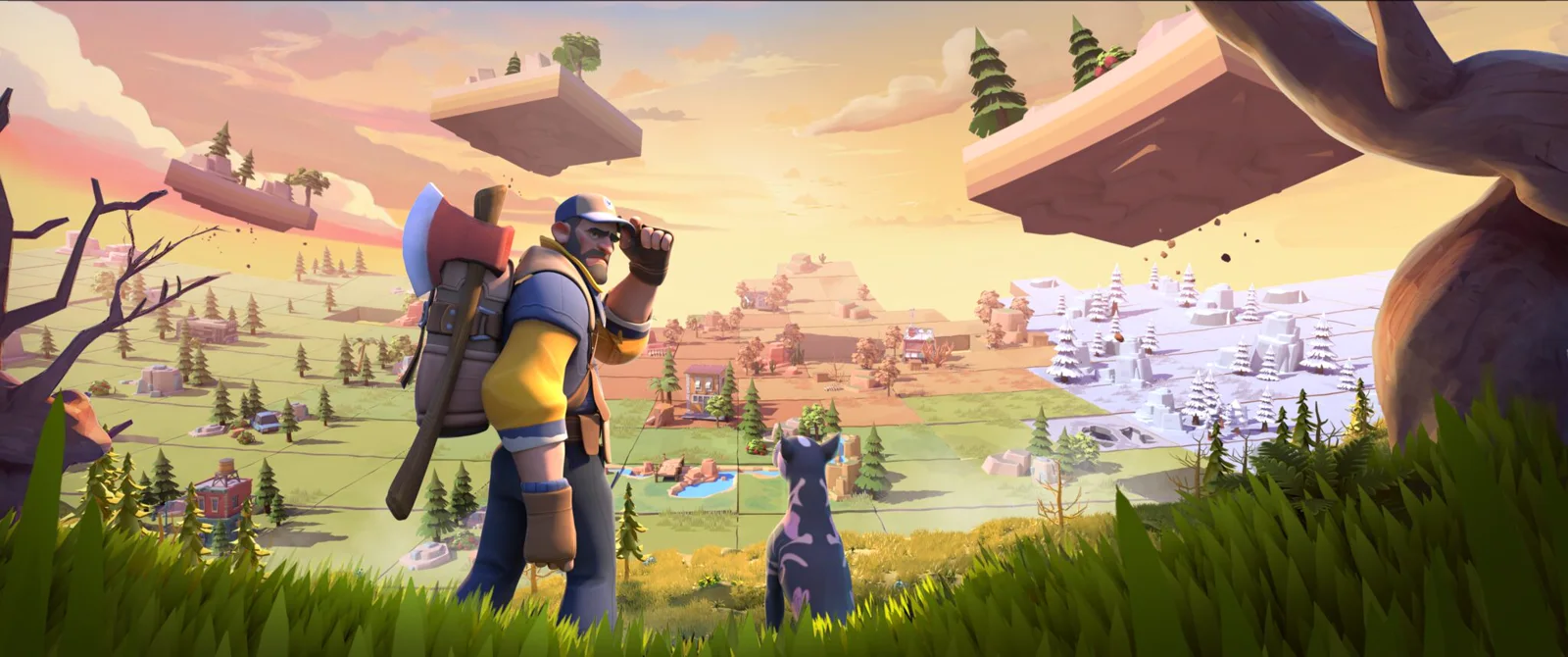
The map is not given to you. You take it, one tile at a time
You start on a single square of cleared ground. Everything around it is fog.
Expanding costs resources, and every new tile you claim is a permanent decision: more farmland means more food, but also more perimeter to defend. More forest means more wood, but woods are where the zombies come from.
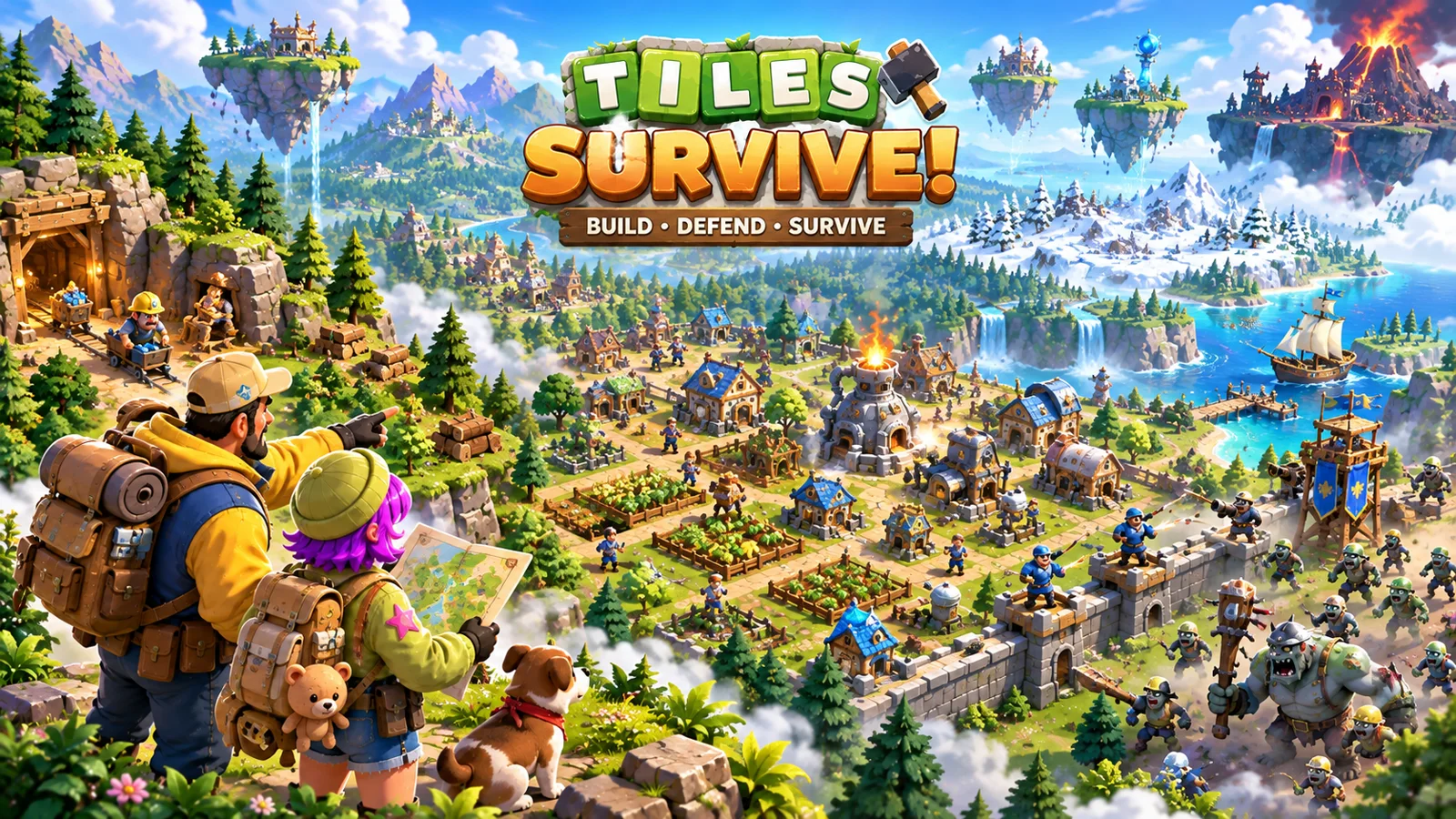
This is the part that surprises people. In most builders, the map is a canvas. Here it is a negotiation. Claiming a tile you cannot defend is how you lose a base you spent four hours building, and the game does not warn you.
The upside is that the world feels earned. By the time you can see the coastline, you remember what every tile between you and it cost.
Every night, the game takes the wheel
At dusk, control shifts. You stop placing buildings and start watching a wave form at the edge of your territory.
Walls slow them. Towers thin them. Your heroes hold the line where the wall is thinnest — and there is always a thinnest point, because you were greedy about farmland three tiles ago.
What makes this work is that the night is short. It is not a twenty-minute tower defence stage; it is ninety seconds of consequence for a full day of decisions. Lose, and you do not restart — you rebuild, with less. That loop is the reason people keep opening the game, and it is the part no screenshot communicates.
Free on PCTiles Survive!Build your base, explore new tiles, survive the night.Play freeHeroes are a system, not a gacha wall
You recruit survivors, each with a role: builders who speed construction, fighters who hold walls, gatherers who work faster in specific terrain.
The obvious worry with any free game is that the good ones sit behind a paywall. In practice, the heroes you are handed in the first week cover every role you need, and the progression that matters — levelling them, equipping them, positioning them — costs time, not money.
You will eventually meet players with better rosters. You will not meet a wall where the game stops working unless you pay.
The first week is unusually generous
Free-to-play games front-load rewards to hook you. This one is no exception, and it is worth knowing what you get before deciding whether to install.
The opening days hand out enough resources to skip most of the early grind, a starter hero package, and a run of daily login rewards that stack faster than the build times they are meant to cover. Starting now with the full launch bonus puts you several days ahead of where a cold start would leave you.
That matters more than it sounds. The slow part of this game is hour one. Anything that shortens it is the difference between quitting and getting to the point where the loop clicks.
It runs on almost anything
This is the practical reason a lot of players stick with it.
Tiles & Survive is a Windows title that does not ask for a modern graphics card. The art is stylised rather than detailed, which ages well and keeps frame rates stable on laptops and older desktops. If your machine struggles with the current wave of releases, this one will not be the game that reminds you.
There is no download cost either — the game is free to play, with no upfront purchase and no trial period.
Who should skip it
Two kinds of players will not enjoy this.
If you want to build undisturbed — to design a perfect town and admire it — the nightly siege will feel like an interruption rather than a point. There are better games for that, and you will resent this one by day three.
And if you can only play in long, rare sessions, the late game will frustrate you. Timers reward frequent short visits, not weekend marathons. That is the honest cost of the format.
The verdict
8.4/10. A base-builder with genuine teeth.
- The day/night loop gives every decision a deadline, which is what most builders lack
- The early progression is generous enough that a free player reaches the interesting part quickly
- Heroes and equipment are earned through play, not gated behind a wall
- It runs on modest hardware, so the audience is not limited to people with current PCs
Give it a little patience through the first hour. The moment the loop clicks is the moment you understand why people are still playing a year in.
Download Tiles & Survive free on Windows — no purchase, no trial, and the launch bonus is still running.
Pros
- The night siege turns building into a real decision, not busywork
- Genuinely playable without spending — the early progression is generous
- Runs on modest hardware, no high-end PC needed
- Tile expansion makes the map feel earned rather than handed over
Cons
- The first hour is slow before the loop clicks
- Late-game timers reward players who log in often

Tiles Survive! is free on PC
Build your base, explore new tiles, survive the night. Download it from the official site.
Play free on PC