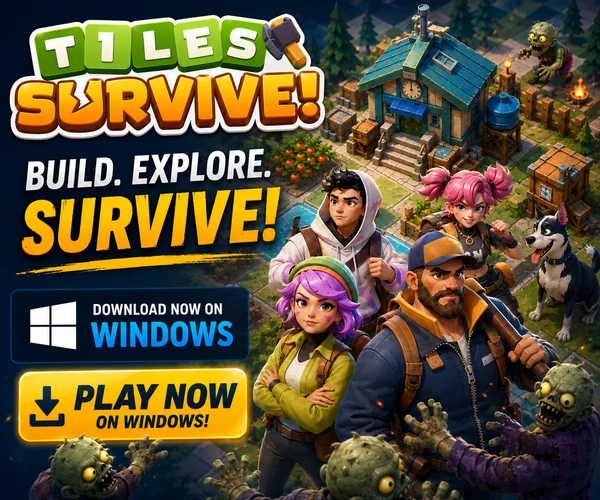
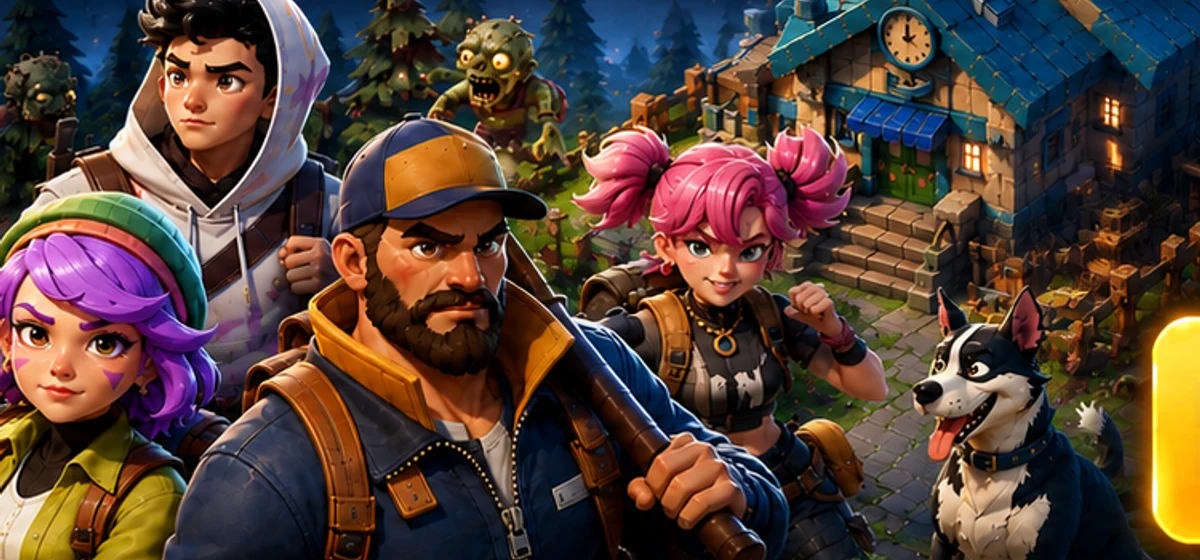
Tiles Survive! opens with a cinematic: Sarge, a former Special Forces officer, rallying survivors against a zombie horde. What you actually spend your first hour doing is clearing fog off a grid, assigning survivors to gather wood, and deciding which building to queue next. That gap between the pitch and the gameplay isn't a scam — it's just how this genre of mobile strategy game works, and FunPlus (the studio behind Tiles Survive!, and behind similar titles like State of Survival) builds it the same way every time: a narrative wrapper over a tile-clearing, base-building, alliance-driven strategy loop. Knowing that going in saves you the disappointment of expecting a survival-horror game and getting a spreadsheet with a story attached.
This guide covers what actually moves your account forward in the first week or two, and where the game's systems are designed to slow you down on purpose.
How tile expansion actually works
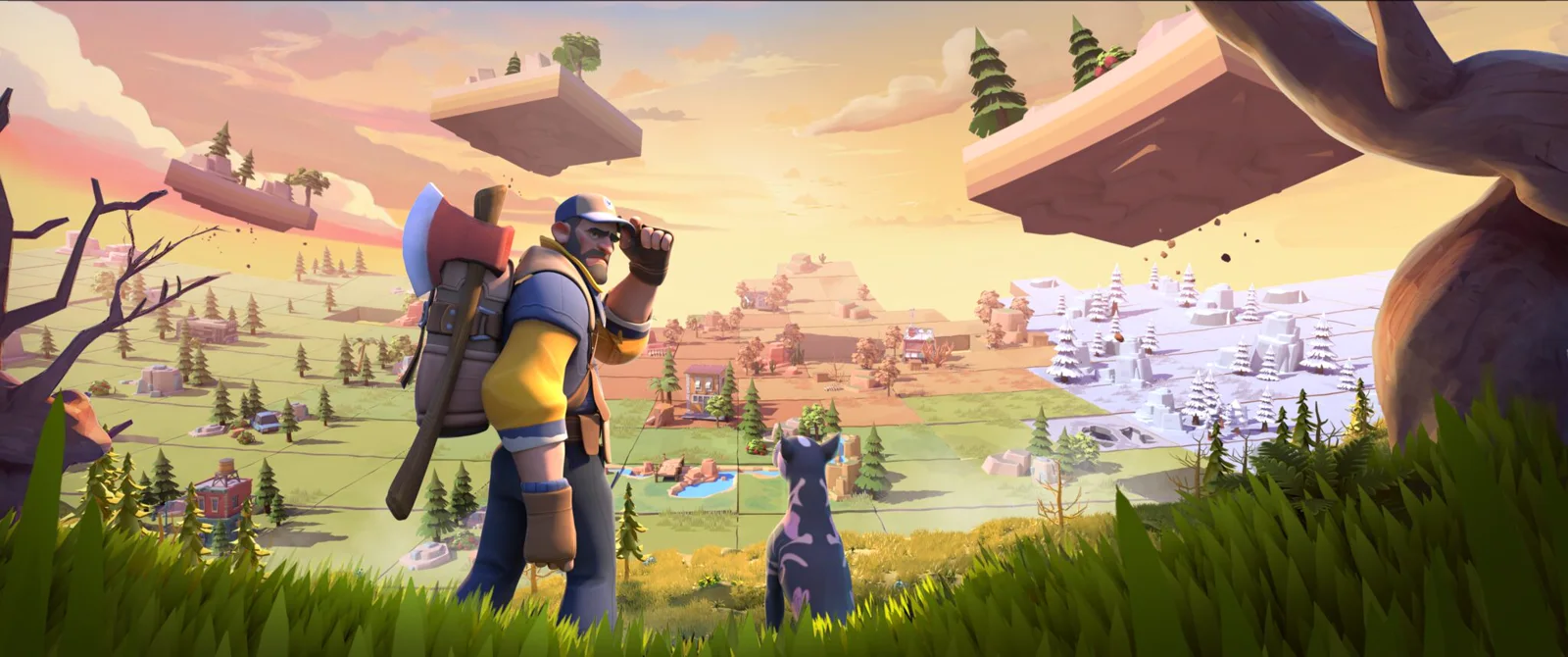
The map is split into individual tiles, most of them hidden under fog at the start. Clearing a tile reveals what's underneath — usually wood, stone, or food resources, sometimes a structure or a zombie encounter tied to that tile's biome. As you push outward, new biomes introduce different threats, so the tiles right at the edge of your explored territory are rarely a walk in the park.
The practical takeaway: don't clear tiles randomly just because they're adjacent to your base. Check what resource you're short on — food, wood, stone are the three you'll be juggling constantly — and prioritize tiles that match that shortage. Clearing a stone tile while you're drowning in stone and starving for food is a wasted action, and every tile clear costs stamina/energy that regenerates slowly, so wasted clears are wasted time, not just wasted resources.
Don't rush to expand your explored radius as fast as possible either. A wider map means more tiles to defend and more zombie encounters scaling with your biome depth, without necessarily giving you more usable resources than a smaller, well-managed footprint. Expand a little ahead of your actual production needs, not a lot ahead of them.
The Power Plant is your real first goal
Early on it's tempting to chase every unlockable system at once — heroes, a second building line, cosmetic upgrades, whatever the game dangles in front of you. Resist it. The single building that unlocks the most downstream content is the Power Plant, the repurposed energy source that powers your base and speeds up nearly everything else you do.
Concretely, that means:
- Route upgrade materials and workers toward whatever building gates your next Power Plant level, even if a different building looks more exciting.
- Keep food, wood, and basic resource production stable before you sink resources into anything decorative or secondary.
- Assign enough survivors to core production jobs first — a fully staffed base that produces steadily beats a flashy base that stalls out because nobody's gathering food.
The mistake that costs new players the most time isn't a bad decision, it's indecision — spreading limited early resources across five half-finished systems instead of pushing one all the way through. Pick the Power Plant path and stay on it until it stops being your bottleneck.
 Free on PCTiles Survive!Build your base, explore new tiles, survive the night.Play free
Heroes: commit, don't hoard
Tiles Survive! layers hero squads on top of the base-building loop, and each hero has skills that lean combat, resource efficiency, or support. New players often sit on hero EXP items and skill books, waiting for a "better" hero to show up before spending them. Don't. A hero you've actually leveled and geared beats two mediocre heroes sitting half-built in reserve.
Pick one dependable primary squad early, dump your EXP materials and skill books into it, and equip it with the best gear you have on hand rather than banking gear for later. You'll unlock more heroes as you progress regardless — the goal right now is having one squad that can actually clear the tiles and events in front of you today, not a roster of theoretical potential.
Know the systems that exist to slow you down
This is the part most guides skip, and it's the part that matters if you're deciding how much time (or money) you want to put into this game. Like most FunPlus strategy titles, Tiles Survive! runs on a speedup economy — general speedups, construction speedups, training and healing speedups — and the game nudges you to burn them impulsively. Don't. General speedups are the most valuable and the most flexible; players who stick around long-term hoard them for research and construction queues rather than dumping them into troop training, which eats speedups fast for comparatively little return.
A few other things worth knowing before you're deep in:
- Alliances matter more than solo play. Joining an active alliance early gets you shared gifts, rally bonuses, and access to alliance-gated events. A quiet or inactive alliance is close to not having one at all — check activity before you commit.
- New servers exist for a reason. Jumping onto a long-established server means competing against accounts that have had months of head start on power. If you're starting fresh, look for a newer server rather than joining wherever a friend already has a maxed base.
- Events drive a lot of the actual progression. Chapter objectives, alliance events, and ranking events are where a chunk of your resources and rewards come from — treat them as part of the core loop, not optional side content.
- The story missions are a guide rail, not the point. Chapter tasks (upgrade a building, rescue a survivor, gather X resource) exist to walk you toward the next unlock. They're a fine to-do list for your first sessions, but they're pacing, not depth.
The honest version
Tiles Survive! is a competent entry in the tile-clearing survival-strategy genre, and the core loop — clear tiles, manage resources, build a hero squad, join an alliance — is solid if you enjoy that kind of game. What it isn't is the tense, narrative-driven zombie survival experience the trailers imply. There's no permadeath, no real-time horde management, no moment-to-moment tension beyond queue timers. If you go in expecting a management strategy game with a zombie skin, you'll get exactly what's advertised on the tin, minus the cinematic framing. If you go in expecting the story from the ad, temper that expectation now.
For your first week: pick a fresh-ish server, join an active alliance immediately, funnel resources into the Power Plant path, commit to one hero squad instead of spreading EXP thin, and hold onto your general speedups instead of spending them on the first shiny queue you see. That's the entire early-game skeleton — everything else is decoration on top of it.
The game shifts between seasons, so it's worth knowing what changed before you commit to a build: Update 2.5.800 launched Rising Legend Season 2 along with a new Hall of Glory.
Tiles Survive! is free on PC
Build your base, explore new tiles, survive the night. Download it from the official site.
Play free on PC