
Verdict
Star Trek Fleet Command is a genuinely competent base-building strategy game dressed in one of the best-executed licenses in mobile gaming, and for the first couple of weeks that combination is close to irresistible. But the free-to-play economy tightens fast and hard: mid-game resource harvesting turns into a war of attrition against paying players, and periodic PvP events can actively stall out anyone who hasn't invested real money. It's a fun galaxy to visit. Staying there long-term without spending is a different proposition.
Star Trek Fleet Command has been running since late 2018, which by mobile live-service standards makes it practically a fixture. Developed by Digit Game Studios and published by Scopely under license from Paramount, it belongs to the same family of base-building strategy games as dozens of other mobile titles — build a starbase, recruit a crew, build ships, mine resources, fight over territory. What sets it apart, and what's kept us playing longer than we expected, is how seriously it treats the license it's built on. What eventually wore us down is a monetization curve that gets noticeably steeper the moment you stop being a beginner.
The essential: a genre template, executed with real care
Strip away the Star Trek branding and the skeleton underneath is familiar: a home base you upgrade on timers, a tech tree you climb building by building, ships you send out to mine dilithium and other resources, and an alliance system that pushes you toward cooperating with (and eventually fighting alongside) other players. If you've played Rise of Kingdoms, State of Survival, or any of their many cousins, the shape of Fleet Command will feel instantly familiar.
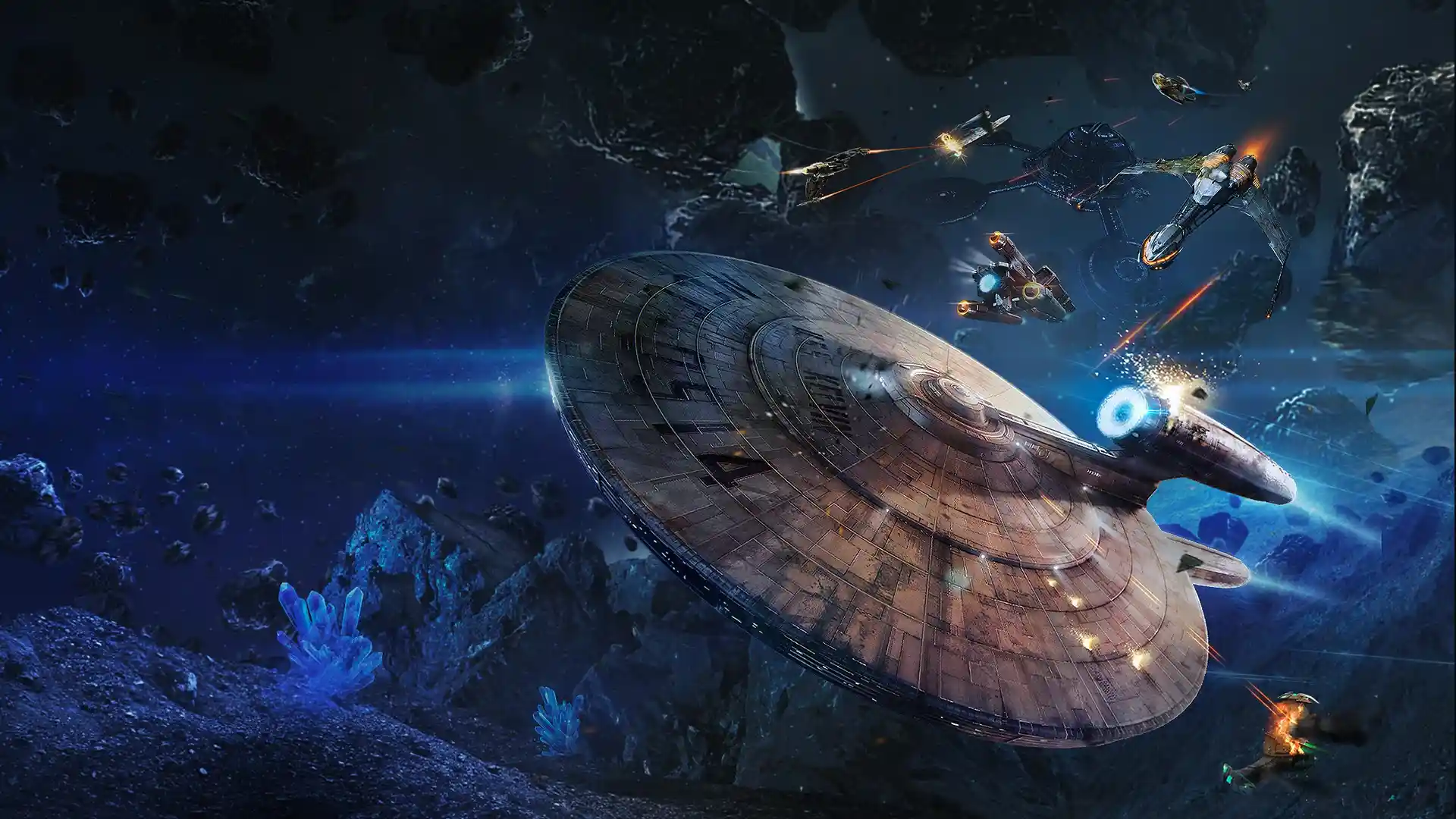
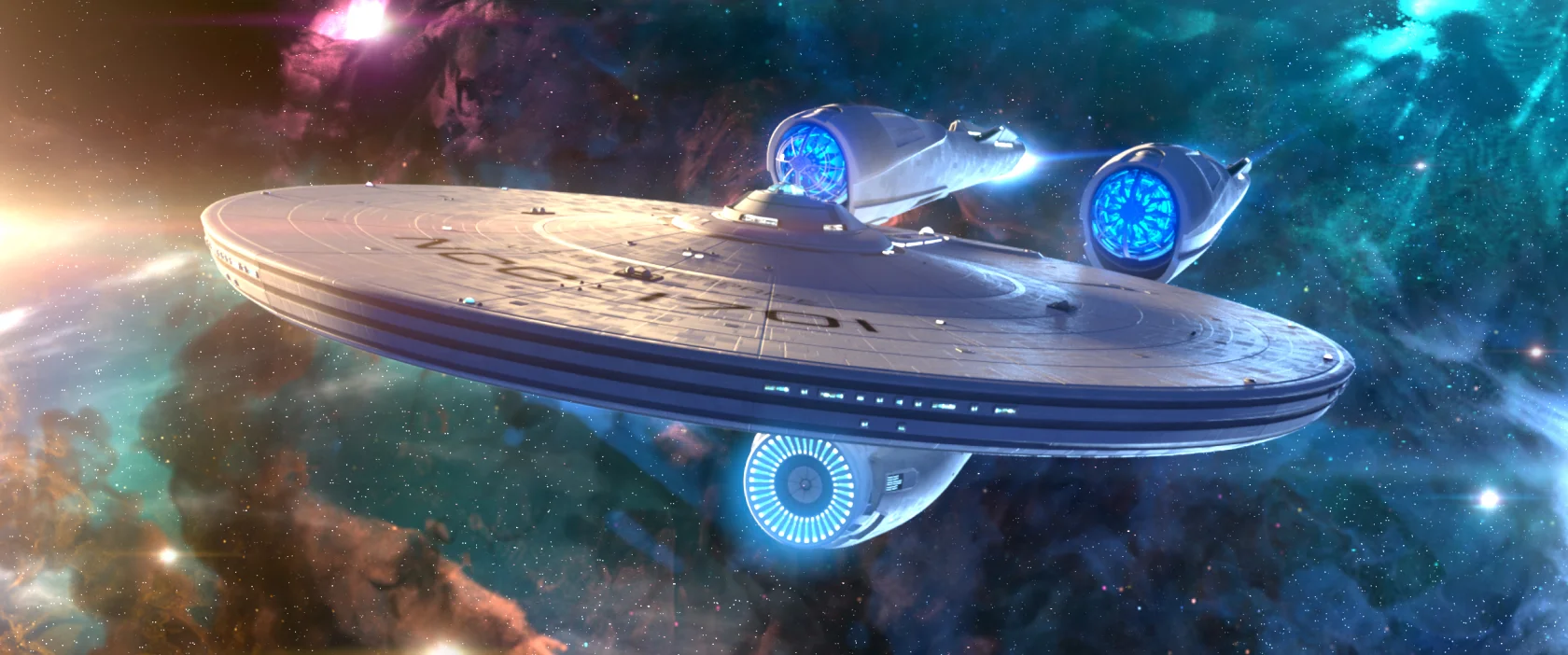
Where it separates itself is in how much of the source material actually made it into the game. You're recruiting officers like Kirk, Spock, and Nero, each with distinct abilities that meaningfully change how a ship performs — this isn't a license slapped onto generic art assets, it's a system where pairing the right captain and bridge officers with the right hull changes your actual combat math. The ship roster spans the Enterprise, Klingon Birds-of-Prey, Romulan Warbirds, and dozens more, each modeled with a level of detail that suggests the team cared about getting the aesthetics right, not just clearing a licensing checkbox. Exploration nodes and story missions borrow enough from Trek's tone — first-contact scenarios, away-team choices, faction politics between the Federation, Klingons, and Romulans — that it earns a bit of the "boldly go" feeling the license promises, at least in the opening stretch.
The experience: genuinely strategic, genuinely time-hungry
The systems here have more depth than they get credit for. Officer combinations aren't cosmetic — certain pairings unlock synergies that change whether you win or lose a fight, research paths force real trade-offs between economy and military strength, and alliance diplomacy (territory control, joint operations, shared defense) adds a social layer that a lot of competitors skip entirely. For players who enjoy optimization for its own sake, there's a lot to chew on, and the game rewards planning rather than just tapping faster.
The cost of that depth is a genuinely dense interface. Multiple overlapping currencies, timers, event tracks, and menus stack on top of each other quickly, and the game rarely slows down to explain why a given system matters before throwing the next one at you. New players who aren't already fluent in this genre's conventions will spend real effort just figuring out what to prioritize, and community wikis and Discord guides end up functionally necessary rather than optional.
Free on PCStar Trek Fleet CommandCommand your own fleet across the Star Trek galaxy.Play freeThe limits: where the economy takes over
This is where our notes turn from admiring to frustrated. Fleet Command is free to download, but it is not gentle about asking for money, and the ask escalates fast. Player accounts of the mid-game consistently describe the same pattern: once you're past roughly the first dozen or so levels, resource-mining ships become a target for higher-level, better-funded players who can destroy them faster than a free player can rebuild, turning basic economic progress into an uphill fight against people who've simply spent more. New ships have historically launched as real-money-only purchases for a window after release, meaning the strongest new tools in the game aren't earnable at all until that window closes.
The bigger issue is structural rather than incidental: recurring PvP events force open-world combat for days at a stretch, and players below the event's effective power threshold report being unable to make meaningful progress for the event's entire duration — not a difficulty spike, but a wall. That's a different problem from "spending money is faster," which is true of nearly every free-to-play game and easy to accept. It's closer to "not spending money means certain systems actively work against you," which is a harder thing to defend, even from a game that's otherwise well made.
Who is this for?
If you're a Star Trek fan who wants to spend a few weeks exploring a galaxy built with obvious affection for the source material — recruiting a crew, building a fleet, poking at first-contact missions — Fleet Command delivers that experience better than almost anything else wearing the license. It's also a reasonable pick if you already enjoy base-building strategy games and are comfortable with the genre's normal free-to-play rhythms, since the systems here are a cut above the genre average in depth.
It's a much harder recommendation if you want a long-term strategy game you can progress in on skill and patience alone. The mid-game resource pressure and the forced PvP windows are real obstacles, not exaggerated complaints, and they show up early enough that you'll hit them well before you've had time to fall in love with the rest of the game.
The verdict
Star Trek Fleet Command earns real credit for treating its license like a responsibility rather than a marketing hook, and its underlying systems — officer synergy, ship loadouts, alliance play — are deeper and more considered than most of its mobile-strategy peers. That's enough to make the first stretch of play genuinely enjoyable, and it's part of why the game has sustained an active community across eight years of updates. But the economy tightens aggressively past the early game, with mining harassment and forced PvP events that can stall free players outright rather than just slow them down. We're scoring it 6.2/10: a well-crafted universe to visit, and a strategy game worth respecting on its mechanics, but one that asks a lot of your wallet if you want to keep exploring it.
Want to see the officer systems for yourself?
Star Trek Fleet Command is free to download on Windows and Mac. Everything described above — officer synergies, ship loadouts, alliance play — is available without spending anything.
Play free →Pros
- One of the best-executed licensed tie-ins in mobile gaming, with hundreds of recognizable officers and ships
- Genuinely deep systems: officer synergies, ship loadouts, research trees, and alliance diplomacy all matter
- Eight years of continuous updates and a large, active community are proof the core loop holds up
Cons
- Monetization escalates sharply once you're past the early levels, with resource nodes routinely contested by paying players
- Recurring forced PvP events can stall free-to-play progress for days at a time
- The moment-to-moment interface is dense and unfriendly to anyone who isn't already deep into the genre
Star Trek Fleet Command is free on PC
Command your own fleet across the Star Trek galaxy. Download it from the official site.
Play free on PC